20:1 Low Speed Fibre Optic Implant HP Upto 120 Ncm Torque
20:1 Fibre Optic Dental Implant Handpiece – Precision, Visibility and Torque Control for Implant Surgery
Dental implantology demands precise instrumentation, controlled torque, stable speed and clear visibility throughout every stage of osteotomy preparation and implant placement. The quality of the surgical handpiece can therefore have a direct impact on handling, workflow efficiency and operator confidence.
Among the most widely used instruments for implant procedures is the 20:1 fibre optic dental implant handpiece. Its reduction gearing converts the high rotational speed of an implant motor into the low-speed, high-torque output required for surgical drilling and implant placement.
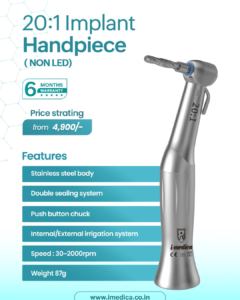
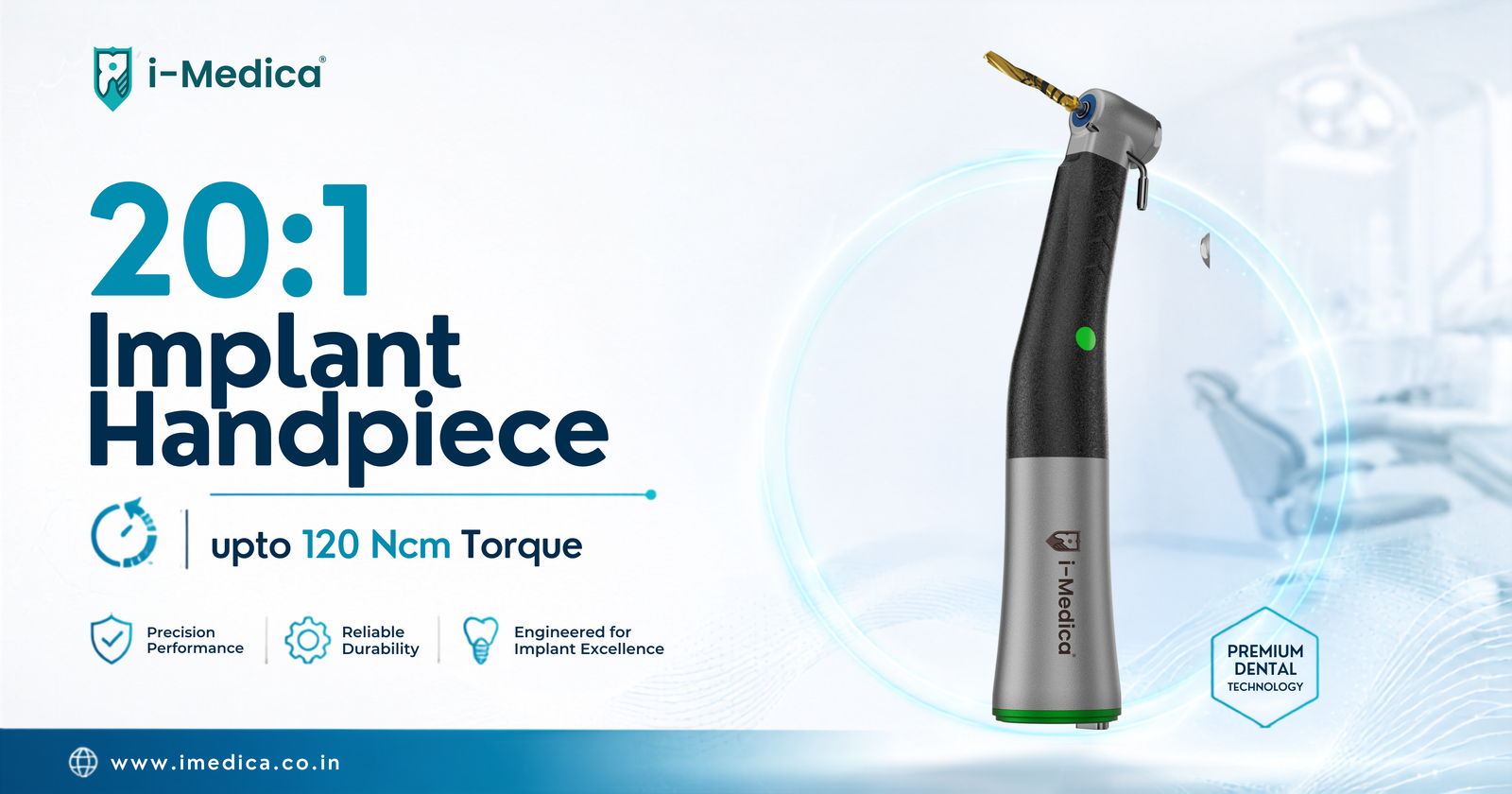
The i-Medica 20:1 Fibre Optic Dental Implant Handpiece, designed for professional implantology applications, combines a 20:1 reduction ratio with fibre-optic illumination and a design engineered for demanding implant workflows. With torque capability of up to 120 Ncm, it is developed for dentists and implantologists who require controlled performance, durability and improved visibility during surgical procedures.
This article explains how a 20:1 fibre optic implant handpiece works, why the reduction ratio matters, the advantages of fibre-optic illumination, important features to consider when selecting an implant handpiece, and how the correct handpiece can help improve an implant surgery workflow.
For additional product information, visit www.imedica.co.in.
What Is a 20:1 Fibre Optic Dental Implant Handpiece?
A 20:1 dental implant handpiece is a reduction contra-angle handpiece designed specifically for use with surgical implant motors.
The term 20:1 refers to its gear reduction ratio.
In simple terms, the handpiece reduces the rotational speed delivered by the micromotor while proportionally increasing the usable torque available at the bur or implant driver.
For example, when a surgical micromotor rotates at a high speed, the internal gearing of a 20:1 handpiece converts that speed into a much lower working speed suitable for procedures such as:
- Osteotomy preparation
- Pilot drilling
- Sequential implant drilling
- Countersinking
- Bone preparation
- Implant insertion
- Implant site refinement
Unlike conventional high-speed dental handpieces, implant handpieces are engineered to operate at controlled surgical speeds while transmitting significant torque.
The fibre-optic component provides illumination around the surgical working area when connected to a compatible optic implant motor. This can give the clinician a clearer view of the osteotomy site, bur position and surrounding tissues.
The combination of reduction gearing, torque transmission and illumination makes a fibre-optic 20:1 handpiece an important instrument in modern implantology.
Why Is a 20:1 Reduction Ratio Used in Implant Surgery?
Dental implant surgery requires a fundamentally different mechanical output compared with routine restorative dentistry.
A conventional high-speed handpiece is designed to operate at extremely high rotational speeds with relatively low torque. Implant drilling, on the other hand, requires controlled rotational speed and sufficient torque.
The 20:1 reduction mechanism helps achieve this balance.
Lower and More Controlled Speed
Implant osteotomy preparation is normally performed using specific drilling sequences recommended for the implant system and bone condition.
A reduction handpiece enables the surgical motor to deliver controlled low-speed rotation to the bur.
This gives the clinician greater control during drilling compared with instrumentation designed primarily for high-speed cutting.
Higher Torque Availability
As rotational speed is reduced through the gearing mechanism, torque transmission at the handpiece output increases.
This is particularly important during implant placement because the operator may need substantial torque at comparatively low rotational speed.
The i-Medica 20:1 Fibre Optic Implant Handpiece is engineered for torque capability of up to 120 Ncm, providing a robust mechanical platform for professional implantology applications when used within the limits and protocols specified for the complete surgical system.
Better Control During Surgical Procedures
Controlled rotation helps the clinician maintain a stable drilling path and follow the planned osteotomy sequence.
The 20:1 ratio has therefore become a widely adopted configuration for implantology equipment.
Why Fibre Optic Illumination Matters
Visibility is one of the most important aspects of surgical dentistry.
Implant procedures may involve restricted access, posterior regions, deep osteotomy sites and areas where the operator’s direct line of sight is limited.
A fibre optic implant handpiece helps bring illumination closer to the surgical field.
Instead of relying entirely on overhead operatory lighting, illumination is transmitted through the handpiece and directed toward the working area.
This can provide several practical advantages.
Improved Surgical Field Visibility
Better lighting can make it easier to observe the operating field, particularly during posterior implant procedures.
The operator can more clearly monitor the relationship between the bur, soft tissues and surgical site.
Better Bur Positioning
During osteotomy preparation, accurate bur positioning is critical.
A well-illuminated working area may help the clinician monitor the angulation and position of the surgical bur more effectively.
Reduced Dependence on External Light Positioning
Dental operating lights remain essential, but the clinician or assistant may need to reposition them as the procedure progresses.
Integrated fibre-optic illumination provides an additional light source directly at the handpiece.
More Convenient Workflow
When an implant procedure involves multiple drilling stages, instruments and irrigation, integrated illumination can simplify visualization without requiring constant adjustments to external lighting.
For implantologists who regularly perform surgical procedures, fibre optics can therefore represent a meaningful ergonomic upgrade over non-optic handpieces.
i-Medica 20:1 Fibre Optic Implant Handpiece – Built for Implantology
The i-Medica 20:1 Fibre Optic Dental Implant Handpiece is designed for use in professional implant surgery workflows.
Its construction focuses on three key requirements:
Precision performance, reliable durability and implant-focused engineering.
20:1 Reduction Gear System
The reduction mechanism converts micromotor speed into a lower-speed, higher-torque output suitable for implant drilling and placement.
This configuration supports controlled operation throughout different stages of implant surgery.
Torque Capability Up to 120 Ncm
The handpiece is engineered to support torque transmission of up to 120 Ncm, making it suitable for demanding surgical applications when used according to the manufacturer’s instructions and compatible system specifications.
High torque capacity is particularly valuable because implantology requires equipment capable of operating reliably under substantial mechanical loads.
Fibre Optic Illumination
The integrated fibre-optic system directs light toward the working field when used with a compatible optic motor.
This enhances visibility around the implant site and supports a more controlled surgical workflow.
Ergonomic Contra-Angle Design
The contra-angle configuration allows the operator to approach different areas of the oral cavity while maintaining an appropriate hand position.
Ergonomics become particularly important during longer surgical procedures where consistent instrument control is required.
Designed for Professional Implant Workflows
Whether the clinician is preparing the initial osteotomy or performing the final stages of implant placement, the handpiece is designed to provide dependable mechanical transmission throughout the procedure.
20:1 Fibre Optic vs Non-Optic Implant Handpiece
Both optic and non-optic 20:1 handpieces can be used for implant surgery, provided they are compatible with the surgical motor and intended application.
The main distinction is illumination.
A non-optic 20:1 implant handpiece depends primarily on the dental operatory light or surgical headlight for visualization.
A fibre optic 20:1 implant handpiece provides additional light directly near the surgical field.
For clinics performing implant surgery regularly, fibre-optic illumination may provide a more convenient and premium workflow.
Dentists working in posterior regions or areas with restricted visual access may particularly appreciate the additional localized illumination.
However, the handpiece must be connected to a motor system capable of supplying the appropriate light source for the fibre-optic system to function.
Importance of Torque in Dental Implant Surgery
Torque is one of the key mechanical parameters in implant dentistry.
The implant motor and handpiece work together to deliver rotational force to the drill or implant driver.
During drilling, the requirement is generally controlled cutting at the selected speed. During implant insertion, the torque demand can increase depending on bone characteristics, implant design, osteotomy dimensions and the manufacturer’s surgical protocol.
A high-quality handpiece must therefore transmit torque consistently without excessive mechanical play or instability.
The maximum torque specification should not be confused with the torque that should automatically be used for every implant.
Actual implant placement torque must always be selected according to the implant manufacturer’s recommendations, clinical circumstances and the treatment protocol chosen by the clinician.
The advantage of a handpiece capable of handling higher torque is its mechanical reserve and suitability for demanding surgical workflows—not a requirement to operate every implant at maximum torque.
Importance of Stable Speed
Torque receives considerable attention in implant dentistry, but speed stability is equally important.
Surgical drilling protocols commonly specify different speeds for different stages of osteotomy preparation.
A stable implant motor and reduction handpiece combination helps maintain the programmed rotational output as working resistance changes.
This contributes to a more predictable operating experience.
The performance of the complete system depends on several components working together:
- Implant motor
- Micromotor
- Handpiece
- Surgical bur
- Irrigation system
- Foot control
- Software or motor control electronics
Selecting a reliable implant handpiece is therefore one part of building an effective surgical system.
Irrigation During Implant Drilling
Implant osteotomy preparation generates friction between the surgical drill and bone.
For this reason, implant motor systems are commonly used with irrigation according to the applicable surgical protocol.
The handpiece design should allow the surgical team to maintain clear access to the drilling area while irrigation is delivered to the working site.
Adequate irrigation, correct bur condition, appropriate drilling pressure and adherence to recommended speed protocols are all important components of controlled implant site preparation.
A quality implant handpiece should integrate smoothly into this workflow rather than interfering with the clinician’s visualization or access.
What to Look for When Buying a 20:1 Implant Handpiece
Not all implant handpieces should be judged on appearance alone.
Because these instruments operate under significant mechanical loads, several technical and practical factors should be considered.
1. Torque Capacity
Check whether the handpiece is designed to withstand the torque requirements of your implant motor and clinical workflow.
The i-Medica 20:1 Fibre Optic Implant Handpiece supports up to 120 Ncm torque capability.
2. Fibre Optic Capability
If illumination is important to your workflow, select a fibre-optic handpiece and confirm that your surgical micromotor is compatible with it.
3. Gear Quality
The internal reduction gears perform much of the mechanical work.
Precision manufacturing and durable components are important for long-term performance.
4. Bur Retention
The chuck or bur-locking mechanism should hold compatible implant drills securely during operation.
5. Ergonomics
A well-designed handpiece should feel balanced and comfortable in the operator’s hand.
6. Compatibility
Confirm compatibility with your implant motor, motor coupling and intended burs before purchasing.
7. Sterilization Requirements
Dental surgical handpieces must be maintained and sterilized according to the manufacturer’s validated instructions.
Always follow the product-specific cleaning, lubrication, packaging, sterilization and maintenance procedure.
8. Service and Spare Parts
Professional equipment requires after-sales support.
Availability of technical service, maintenance guidance and replacement components can significantly influence the long-term ownership experience.
Maintenance of a 20:1 Implant Handpiece
Proper maintenance is essential for preserving handpiece performance.
Implant handpieces contain precision gears, bearings and mechanical components operating under substantial rotational load.
Clinics should follow the manufacturer’s instructions for cleaning, lubrication and sterilization.
A typical maintenance workflow may include removal of visible contamination, appropriate cleaning, lubrication where specified, packaging and sterilization according to validated procedures.
The handpiece should also be inspected regularly for unusual vibration, noise, overheating, bur retention problems or rotational irregularities.
Continuing to use a handpiece that shows signs of mechanical damage may lead to further internal wear.
Preventive maintenance can help extend service life and maintain consistent performance.
Who Should Consider a Fibre Optic 20:1 Implant Handpiece?
A fibre-optic handpiece is particularly relevant for:
- Implantologists
- Oral surgeons
- Periodontists performing implant procedures
- Prosthodontists involved in implant placement
- Multi-speciality dental clinics
- Dental hospitals
- Implant training centres
- Clinicians upgrading an existing implant motor setup
It can also be a logical upgrade for dentists currently using a non-optic system who want improved illumination around the surgical field.
Building a More Efficient Implant Workflow
An effective implant surgery setup is not dependent on a single specification.
Successful equipment integration comes from combining compatible components that provide controlled speed, reliable torque delivery, effective irrigation and ergonomic handling.
A professional implant workflow may include:
An implant motor with programmable surgical settings, a brushless or surgical micromotor, a high-quality 20:1 reduction handpiece, sharp implant drills, sterile irrigation and appropriate implant placement instruments.
When these elements work together, the clinician can move through the surgical sequence in a structured and efficient manner.
The handpiece acts as the mechanical connection between the motor and the surgical instrument, which makes its quality especially important.
Why Choose i-Medica Dental Equipment?
i-Medica focuses on professional dental equipment designed for the requirements of modern dental clinics and implantology workflows.
The i-Medica 20:1 Fibre Optic Dental Implant Handpiece combines:
20:1 reduction gearing for implant procedures
Fibre-optic illumination for enhanced working-field visibility
Torque capability up to 120 Ncm
Precision-focused performance
Durable construction
Implant-specific engineering
For clinicians investing in surgical instrumentation, long-term reliability and technical support are as important as the initial purchase specification.
Choosing equipment from a dedicated dental equipment supplier can help simplify product selection, compatibility guidance and future service requirements.
Frequently Asked Questions
What does 20:1 mean in a dental implant handpiece?
20:1 refers to the reduction ratio of the handpiece. The internal gearing reduces motor speed and increases usable torque at the output, making the handpiece suitable for implant drilling and placement.
What is the advantage of a fibre optic implant handpiece?
Fibre-optic illumination delivers light closer to the surgical working area, providing improved visibility compared with relying exclusively on an overhead dental light.
Can a 20:1 handpiece be used for implant placement?
Yes. A compatible 20:1 reduction handpiece is commonly used with implant motors for osteotomy preparation and implant placement according to the relevant implant system’s surgical protocol.
How much torque does the i-Medica 20:1 Fibre Optic Implant Handpiece support?
The i-Medica handpiece is designed for torque capability of up to 120 Ncm.
Does maximum handpiece torque mean every implant should be placed at 120 Ncm?
No. The 120 Ncm figure represents the handpiece’s torque capability. Clinical implant insertion torque should be determined according to the implant manufacturer’s protocol and the individual surgical situation.
Is a fibre-optic handpiece better than a non-optic handpiece?
Both can perform implant procedures when properly specified. Fibre-optic models offer the additional advantage of localized illumination near the working field.
Conclusion
The 20:1 Fibre Optic Dental Implant Handpiece is one of the core instruments of a modern implant surgery setup.
Its reduction gearing enables the low-speed, high-torque operation required for implant procedures, while fibre-optic illumination improves visibility around the surgical site.
For clinicians who perform implantology regularly, choosing a handpiece with reliable torque transmission, ergonomic handling, precision gearing and appropriate motor compatibility can contribute to a smoother and more controlled surgical workflow.
The i-Medica 20:1 Fibre Optic Dental Implant Handpiece, with up to 120 Ncm torque capability, combines implant-focused performance with enhanced illumination and durable engineering.
Whether you are establishing a new implantology setup, replacing an existing handpiece or upgrading from a non-optic system, selecting the correct 20:1 surgical handpiece is an important investment in your clinical equipment ecosystem.
For product specifications, availability and enquiries about the i-Medica 20:1 Fibre Optic Dental Implant Handpiece, visit:
i-Medica – Professional Dental Equipment for Modern Implantology.